





대체 부품
이 부품
대체 부품


Price @ 1000
$ 0.378
$ 0.557
$ 0.557
Stock
1,355,023
2,681,400
2,681,400
Authorized Distributors
5
5
5
Case/Package
TSSOP
TSSOP
TSSOP
Number of Pins
20
20
20
Logic Function
D-Type, Latch
D-Type, Latch
D-Type, Latch
Number of Elements
1
1
1
Number of Bits per Element
-
-
-
Propagation Delay
7.6 ns
6.8 ns
6.8 ns
Frequency
-
-
-
Clock Edge Trigger Type
-
-
-
Min Supply Voltage
1.65 V
1.65 V
1.65 V
Max Supply Voltage
3.6 V
3.6 V
3.6 V
Quiescent Current
10 µA
10 µA
10 µA
공급망
Lifecycle StatusProduction (Last Updated: 1 day ago)
Manufacturer Lifecycle StatusACTIVE (Last Updated: 1 day ago)
엔지니어링 리소스
Texas Instruments SN74LVC373APWR의 평가 키트와 참조 설계를 확인하세요.
평가 키트
관련 부품

Texas InstrumentsSN74LVC573APWR
1.65-V to 3.6-V, Octal Transparent D-Type Latches With 3-State Outputs 20-TSSOP -40 to 125

Texas InstrumentsSN74LVC573APW
Octal Transparent D-Type Latches With 3-State Outputs 20-TSSOP -40 to 85

Nexperia74ALVC573PW,118
Latch, 74ALVC573, D Type Transparent, Tri State, 3.8 ns, 24 mA, 20 Pins, TSSOP
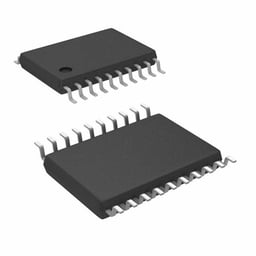


설명
유통업체에서 제공한 Texas Instruments SN74LVC373APWR에 대한 설명입니다.
D-Type Transparent Latch 1 Channel 8:8 IC Tri-State 20-TSSOP
10μA 1.5ns Non-inverting Tristate 1 1.65V 3.6V 24mA D-Type Transparent Latch LVC 1 24mA TSSOP-20 SMD mount,glue mount 1.2mm(height)
IC, 74LVC, SMD, 74LVC373, TSSOP20; Latch Type:D Type Transparent; Output Current:24mA; Propagation Delay:6.8ns; No. of Bits:8; IC Output Type:Tri State; Supply Voltage Range:1.65V to 3.6V; Logic Case Style:TSSOP; No. of Pins:20; Operating Temperature Range:-40°C to +85°C; SVHC:No SVHC (20-Jun-2011); Base Number:74; IC Generic Number:74LVC373; Logic Function Number:74373; Logic IC Base Number:74373; Logic IC Family:LVC; Logic IC Function:Octal D-Type Transparent Latch (3-State); No. of Gates:8; No. of Inputs:1; Operating Temperature Max:85°C; Operating Temperature Min:-40°C; Output Type:Tri State; Package / Case:TSSOP; Supply Voltage:3.6V; Supply Voltage Max:3.6V; Supply Voltage Min:1.65V; Termination Type:SMD
The SN54LVC373A octal transparent D-type latch is designed for 2.7-V to 3.6-V VCC operation, and the SN74LVC373A octal transparent D-type latch is designed for 1.65-V to 3.6-V VCC operation. While the latch-enable (LE) input is high, the Q outputs follow the data (D) inputs. When LE is taken low, the Q outputs are latched at the logic levels set up at the D inputs. A buffered output-enable (OE)\ input can be used to place the eight outputs in either a normal logic state (high or low logic levels) or the high-impedance state. In the high-impedance state, the outputs neither load nor drive the bus lines significantly. The high-impedance state and increased drive provide the capability to drive bus lines without interface or pullup components. OE\ does not affect the internal operations of the latches. Old data can be retained or new data can be entered while the outputs are in the high-impedance state. These devices are fully specified for partial-power-down applications using Ioff. The Ioff circuitry disables the outputs, preventing damaging current backflow through the devices when they are powered down. To ensure the high-impedance state during power up or power down, OE\ should be tied to VCC through a pullup resistor; the minimum value of the resistor is determined by the current-sinking capability of the driver. Inputs can be driven from either 3.3-V or 5-V devices. This feature allows the use of these devices as translators in a mixed 3.3-V/5-V system environment.
제조업체 별칭
Texas Instruments에는 유통업체가 대체하여 사용할 수 있는 전 세계 여러 브랜드가 있습니다. Texas Instruments는 다음 이름으로도 알려져 있습니다:
- TI
- TEXAS
- TEXAS INST
- TEXAS INSTR
- TEXAS INSTRUMENT
- TEXAS INSTRUMENTS INC
- TEXAS INS
- TEXAS INSTRU
- TEXAS INSTRUMEN
- TI/NS
- TEX
- Texas Instruments (TI)
- TEXASIN
- TEXAS INSTRUMENTS INCORPORATED
- TEXINS
- TEXAS INTRUMENTS
- TEAXS
- TEXASI
- TI Texas Instruments
- TEXAS INSTRUM
- TEXAS USD
- TEXAS INSRUMENTS
- TEXAS INSRUMENT
- TEXAS INSTUMENTS
- TI-ROHS
- Texas Instr.
- Texas Instruments Inc.
기술 사양
Physical
Case/PackageTSSOP
Contact PlatingGold
MountSurface Mount
Number of Pins20
Weight76.997305 mg
Technical
Ambient Temperature Range High125 °C
High Level Output Current-24 mA
Independent Circuits1
Logic FunctionD-Type, Latch
Low Level Output Current24 mA
Max Operating Temperature85 °C
Max Supply Voltage3.6 V
Min Operating Temperature-40 °C
Min Supply Voltage1.65 V
Nominal Supply Current10 µA
Number of Bits8
Number of Channels8
Number of Circuits8
Number of Elements1
Number of Gates8
Number of Input Lines2
Number of Inputs1
Number of Output Lines1
Number of Outputs8
Output Current24 mA
PackagingTape & Reel
PolarityNon-Inverting
Propagation Delay7.6 ns
Quiescent Current10 µA
Schedule B8542390000
TerminationSMD/SMT
Turn-On Delay Time1.5 ns
Dimensions
Height0 m
Length6.5 mm
Thickness1 mm
Width4.4 mm